The Center on Main™ in Verrado®
4239 N Village Street
Buckeye, AZ 85396

Monday and Friday
7:30 pm - 8:30 pm

The Center on Main™ in Verrado®
4239 N Village St
Buckeye, AZ 85396

Monday and Friday
7:30 pm - 8:30 pm

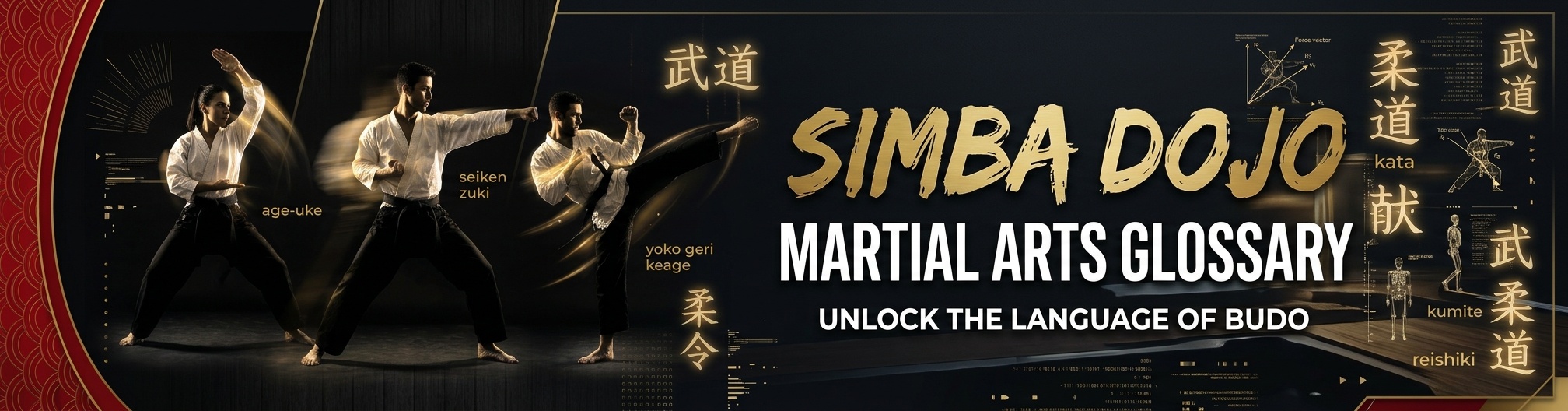
simba dojo glossary banner v2

Jū (柔)

Search for glossary terms (regular expression allowed)

Glossaries

Term Definition
Jū (柔)

Jū (柔) is a foundational Japanese martial arts concept and character translated as "Gentleness," "Flexibility," "Yielding," or "Adaptability."

Key Breakdown & Philosophy

  • Core Concept: Jū does not imply weakness or passivity; rather, it represents the principle of non-resistance and yielding to opposing force in order to redirect, control, or overcome an attacker.

  • The Oak vs. the Willow: A classic Budo metaphor contrasts a rigid oak branch that snaps under heavy snow with a flexible willow branch that bends under the weight, letting the snow slide off, before snapping back up undamaged.

  • Harmonizing Force: Instead of meeting brute force head-on with equal force, the principle of Jū uses leverage, body angling (tai sabaki), and fluid adaptability to turn an opponent's energy against them.

Function & Context in Japanese Budo

  • Judo (柔道 — "The Gentle Way"): Modern Budo founded by Kano Jigoro, emphasizing throws, pins, and submissions using the principle of yielding to conquer (Jū yoku gō wo制su).

  • Jujutsu / Jiujitsu (柔術 — "The Art of Softness/Flexibility"): Classical Okinawan and Japanese unarmed combat systems utilizing joint locks, sweeps, and leverage.

  • Karate Application: In Shotokan and traditional Karate, jū balances the rigid, hard (gō) dynamics of striking. It is essential in defensive evasion, redirection blocks (uke), joint manipulation, and foot sweeps (ashi-barai), forming the foundation of Gōjū (the synthesis of hard and soft).

Author - Sensei Miller
Hits - 2
Ask a question
1000 characters left