The Center on Main™ in Verrado®
4239 N Village Street
Buckeye, AZ 85396

Monday and Friday
7:30 pm - 8:30 pm

The Center on Main™ in Verrado®
4239 N Village St
Buckeye, AZ 85396

Monday and Friday
7:30 pm - 8:30 pm

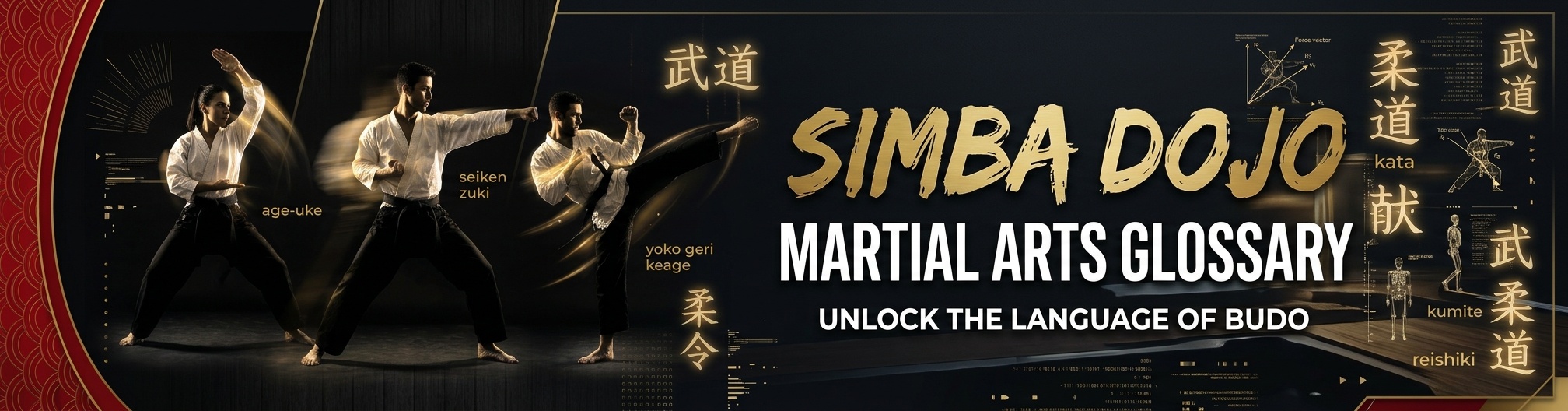
simba dojo glossary banner v2

Do

Search for glossary terms (regular expression allowed)

Glossaries

Term Definition
Do

Do (道), translated as "Way," "Path," or "Philosophical Journey," is the spiritual and ethical framework underlying traditional Japanese martial arts (Budo). It signifies that physical training is not merely a means of self-defense or sport, but an endless path of character refinement, mental discipline, and self-perfection.

Etymology & Cultural Origin

  • Do (道): The Japanese pronunciation of the Chinese character Tao (or Dao).

  • Kanji Composition: Composed of radicals representing "foot/movement" (辶) and "head/mind" (首)—symbolizing moving forward under the guidance of thought, intention, and ethical consciousness.

  • Literal & Philosophical Meaning: The path walked with mind and body aligned.

The Evolution from Jutsu to Do

The inclusion of Do marks the historical transition of Japanese martial systems from feudal battlefield survival into modern transformative disciplines:

  • Jutsu (術 — Art / Technique / Skill): Systems such as Kenjutsu, Jujutsu, or Okinawan Ti focused strictly on practical combative application, lethality, and mechanical effectiveness (Gi).

  • Do (道 — The Way): When appended to martial traditions—creating Karate-do (空手道), Judo (柔道), Kendo (剣道), and Aikido (合気道)—the ultimate purpose expanded beyond overcoming external enemies to mastering the internal self.

Core Principles of the "Way"

  1. Self-Perfection (Jigyo): As Master Gichin Funakoshi famously articulated in his first precept, "Karate-do is a means to perfect one's character" (Hitotsu, j人格 완성 ni tsutomuru koto). Physical techniques (kihon, kata, kumite) serve as the forge in which patience, resilience, humility, and focus are tempered.

  2. Lifelong Practice (Keiko): A path has no terminal endpoint. Unlike sport achievements that end with competition or age, Do is pursued throughout a practitioner's entire life, adapting as physical capabilities evolve.

  3. Integration Off the Mat: The true measure of walking the Do is not how powerful one's punch is inside the dojo, but how one conducts oneself in daily life—demonstrating courtesy, integrity, emotional composure (fudoshin), and respect (rei) toward others.

See also blog article:  Dō: The Way of Self-Mastery Through Japanese Martial Arts

Author - Sensei Miller
Hits - 11
Synonyms: Way, Michi (道), Shugyō-dō (修行道), Setsudō (説道), Senshin (洗心)
Ask a question
1000 characters left