

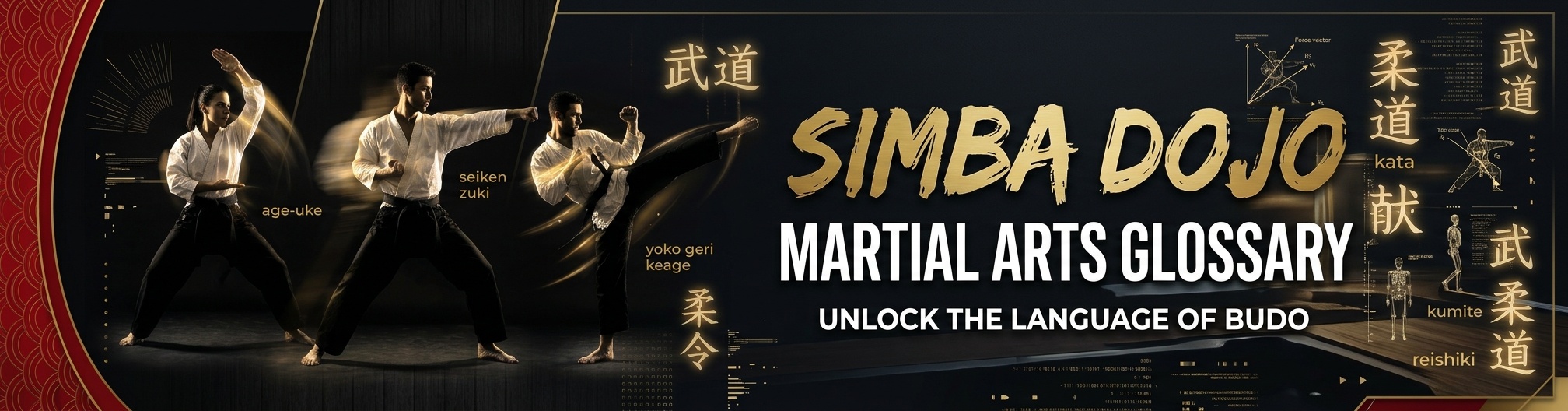
Dō: The Way of Self-Mastery Through Japanese Martial Arts
In Western culture, physical activities are often categorized cleanly into sports, self-defense, or physical fitness. Yet in traditional Japanese martial arts, practice extends far beyond physical utility into something deeper: Dō (道)—the "Way."
Written with the Chinese character for Tao, Dō signifies an ongoing, lifelong journey of self-refinement. When attached as a suffix to traditional martial arts—turning Jujutsu into Judo, Kenjutsu into Kendo, or Karate into Karatedo—it transforms a system of fighting techniques into a profound path for mental, moral, and spiritual growth.
1. Etymology and Philosophical Roots
The kanji for Dō (道) combines two distinct ideological elements:
-
The head (首): Representing thought, spirit, awareness, and direction.
-
Movement / Walking (辶): Representing action, practice, and the physical path forward.
Together, the character implies moving forward with awareness—the active harmony of mind and body progressing along a continuous road.
Historically, Dō emerged as martial techniques shifted away from their immediate battlefield origins during periods of extended peace, evolving into structured disciplines for personal development (Shugyō).
2. From Jutsu (Art/Technique) to Dō (The Way)
Understanding Dō requires examining its historical counterpart: Jutsu (術).
| Feature | Jutsu (武術 - Combat Art/Technique) | Dō (武道 - The Martial Way) |
| Primary Focus | Battlefield survival, technical efficiency | Character building, inner discipline |
| Ultimate Goal | Defeating the enemy external to yourself | Conquering the internal enemy (ego, fear, pride) |
| Outcome Metric | Victory, damage inflicted, survival | Personal growth, emotional poise, harmony |
| End of Practice | When physical capacity wanes | Continues throughout an entire lifetime |
While Jutsu provides the indispensable physical framework—the precise biomechanics of strikes, locks, and footwork—Dō elevates those techniques into tools for self-discovery. Without sound technical skill (Jutsu), there is no substance; without Dō, physical skill remains merely a tool for harm or sport.
3. Core Pillars of Dō in the Dojo
The concept of the "Way" is not an abstract theory; it is actively cultivated every day on the mat (Tatami) through distinct principles:
1. Shugyō (修行) – Austere Mind-Body Training
Dō demands severe, continuous practice. Through repetitive drill work, physical exhaustion, and rigorous discipline, the practitioner’s superficial ego strips away, revealing resilience, composure, and true strength.
2. Reigi (礼儀) – Etiquette as Spiritual Practice
In a Dō path, training begins and ends with bowing (Rei). Respecting the training space, the instructor, your training partners, and your equipment isn't mere ritualism; it is the physical expression of humility and mindfulness.
3. Shin-Gi-Tai (心・技・体) – Unification of Being
A practitioner of Dō strives for the absolute balance of Shin (mind/spirit), Gi (technical skill), and Tai (physical body). True mastery occurs only when all three operate as one.
4. Shoshin (初心) – The Beginner's Mind
No matter how many years pass or what rank is attained, the path of Dō is endless. Approaching practice with Shoshin—an open, humble mind free of self-importance—ensures continuous learning and personal evolution.
4. Modern Applications: Dō in Everyday Life
The ultimate test of a martial path never happens inside the training hall; it unfolds in daily living. The calm focus cultivated while facing an attack translates directly into patience during life's stresses, integrity in personal relationships, and clarity under pressure.
As Karate pioneer Gichin Funakoshi famously noted:
"The ultimate aim of Karate lies not in victory or defeat, but in the perfection of the character of its participants."
Conclusion: The Road That Never Ends
Dō teaches us that perfection is not a static destination to be reached, but a continuous way of living. By committing to the path—embracing the struggle, honoring the etiquette, and constantly refining both technique and character—the martial artist finds that the journey itself is the reward.