

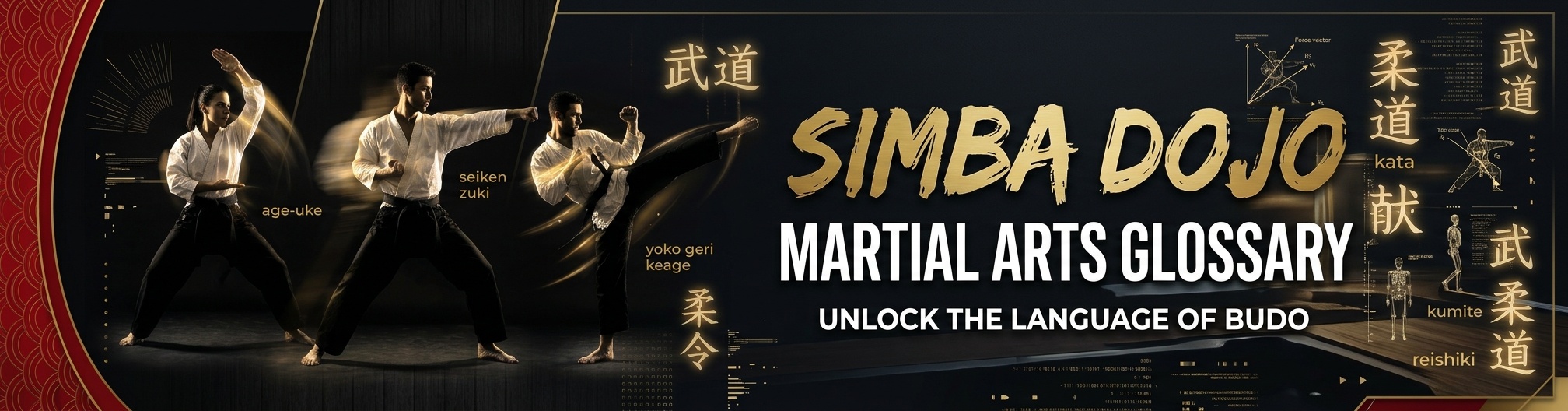
The Evolution of Karate: From Okinawan Tradition to Global Discipline
Today, Karate is recognized globally as one of the most practiced martial arts in the world, renowned for its dynamic striking, crisp forms (Kata), and deep philosophical roots. Yet the art known today as "Karate-do" (the [[2]] of the Empty Hand) is not a single, unchanging system. Instead, it is a living art shaped by centuries of cultural exchange, secret practice, historical adaptation, and modern evolution.
1. Historical Roots: The Okinawan Crucible
The story of Karate begins on the island of Okinawa, the principal island of the Ryukyu Kingdom. Situated at a crucial trade crossroads between Japan, China, and Southeast Asia, Okinawa absorbed diverse cultural influences for centuries.
The Blending of Indigenous Te and Chinese Quanfa
Originally, the native Okinawan fighting system was known simply as Te (手, meaning "Hand"). In the 14th century, formal diplomatic ties with China introduced Okinawan practitioners to Southern Chinese kung fu (Quanfa or Kempo). Over generations, indigenous grappling and striking merged with Chinese striking principles, giving rise to Tōde (唐手, "Chinese Hand").
Following weapon bans enacted by the Ryukyu monarchy and later enforced by the Japanese Satsuma Clan in the 17th century, empty-hand combat developed rapidly in secrecy.
2. The Classical Okinawan Village Styles
By the late 19th century, training clustered around three primary Okinawan towns, yielding distinct stylistic characteristics:
-
Shuri-te (首里手): Developed around the royal capital of Shuri. Characterized by quick, linear movements, fast footwork, and lighter, natural stances designed for rapid entry and exit.
-
Naha-te (那覇手): Developed in the commercial port town of Naha. heavily influenced by Southern Chinese Crane styles, emphasizing heavy, rooted stances (Sanchin dachi), power generation through tension and breath control (Ibuki), and close-quarters grappling.
-
Tomari-te (泊手): Developed in the coastal town of Tomari. A hybrid blending the quick agility of Shuri-te with the close-range power of Naha-te.
3. The Shift to Mainland Japan: The Birth of Modern Styles
In the early 20th century, masters like Anko Itosu introduced Karate into the Okinawan public school system, refining techniques for physical education and safety.
In the 1920s, Okinawan masters traveled to mainland Japan to demonstrate their art. To facilitate adoption within Japan’s established Budo community, the kanji for Karate was officially changed from 唐手 ("Chinese Hand") to 空手 ("Empty Hand"), emphasizing both empty-handed self-defense and the Zen concept of an empty, selfless mind.
This era gave rise to the major traditional styles recognized today:
| Style | Founder | Key Characteristics & Philosophy |
| Shotokan (松濤館) | Gichin Funakoshi | Long, deep stances, explosive linear power, long-range striking, and rigorous physical discipline. |
| Goju-Ryu (剛柔流) | Chojun Miyagi | "Hard-Soft Style." Blends heavy, linear striking (Go) with circular, redirection techniques (Ju) and breath work. |
| Shito-Ryu (糸東流) | Kenwa Mabuni | Combines Shuri-te and Naha-te lineages; renowned for retaining an extensive library of classical Kata. |
| Wado-Ryu (和道流) | Hironori Otsuka | Blends traditional Karate striking with Jujutsu joint locks, sweeps (Ashibarai), body evasion (Tai Sabaki), and leverage. |
4. 20th Century Offshoots and Full-Contact Evolution
As Karate spread globally following World War II, new training philosophies emerged, leading to further stylistic diversification:
-
Kyokushin (極真): Founded by Masutatsu Oyama in 1957, emphasizing full-contact bare-knuckle sparring (Kumite), extreme physical conditioning, and functional endurance.
-
Sport Karate (WKF): Focused on high-speed point sparring, precise timing, distance management (Maai), and standardized competition Kata.
Conclusion: A Living Tradition
The evolution of Karate illustrates how a martial art can maintain its core principles while adapting to new eras and cultures. Whether practiced as classical Okinawan self-defense, traditional Japanese Budo, high-intensity full-contact conditioning, or modern competitive sport, Karate remains a powerful journey of self-discovery, physical mastery, and character development.