

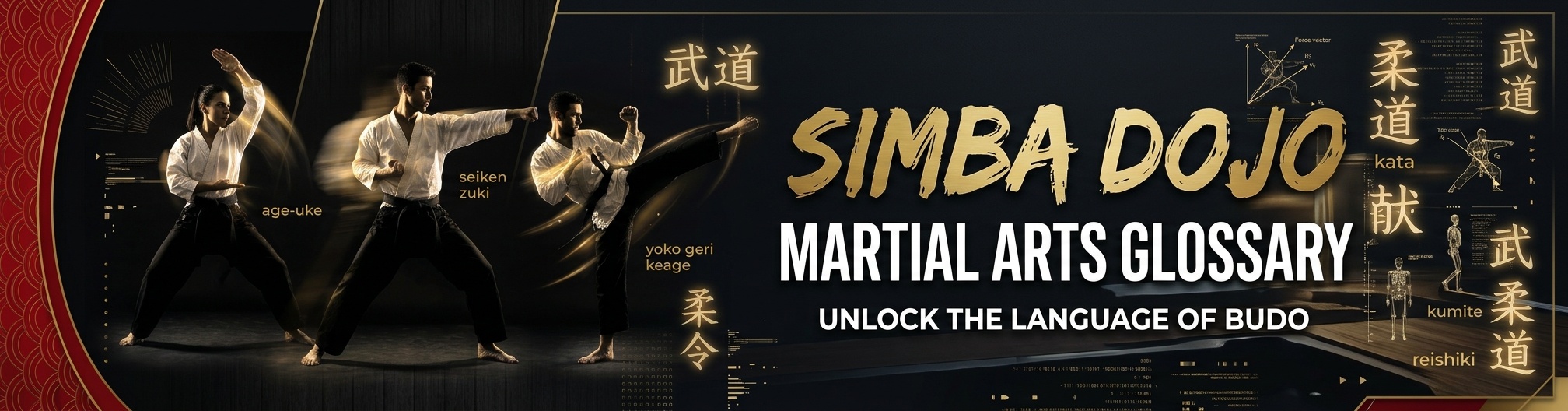
Budo: The Philosophical Heart of Japanese Martial Arts
In a modern world where combat sports are often measured in titles, knockouts, and athletic achievements, Budo (武道) offers a radically different perspective. Beyond physical self-defense or competitive victory, Budo is an inner discipline—a lifelong path that uses the crucible of martial training as a tool for personal refinement and character development.
1. Etymology and Evolution: From Bujutsu to Budo
To understand Budo, one must examine its linguistic roots:
-
Bu (武): Commonly translated as "martial" or "military." Etymologically, the kanji combines two components: "to stop" (止) and "spear/halberd" (戈). Thus, at its deepest level, Bu carries the connotation of stopping conflict or bringing peace, rather than initiating violence.
-
Do (道): Originating from the Chinese concept of Tao, meaning "path," "way," or a spiritual lifestyle.
Historically, Japan's warrior class practiced Bujutsu (武術, martial arts/techniques)—pragmatic combat systems designed for battlefield survival during centuries of civil war. However, during the peaceful Edo period and the subsequent Meiji Restoration, these combat systems evolved. Stripped of their immediate battlefield necessity, methods like Jujutsu, Kenjutsu, and Okinawan Te were transformed into modern Budo disciplines—such as Judo, Kendo, Kyudo, Karatedo, Aikido, and Iaido.
2. Core Pillars of Budo Philosophy
Budo is distinguished from standard athletics by several foundational concepts rooted in Zen Buddhism, Shinto, and Confucianism:
1. Reigi (礼儀) – Etiquette and Respect
Training begins and ends with bowing (Rei). Respect is extended not only to the instructor (Sensei) and training partners, but also to the training space (Dojo) and the equipment. Etiquette is not mere formality; it fosters humility, safety, and a calm mind.
2. Shin-Gi-Tai (心・技・体) – Mind, Technique, Body
True mastery in Budo requires the harmonious unification of three elements:
-
Shin (Mind/Spirit): Mental clarity, focus, emotional control, and moral courage.
-
Gi (Technique): Technical skill, leverage, form, and efficiency.
-
Tai (Body): Physical conditioning, strength, stamina, and health.
3. Shin-Ken-Shobu (真剣勝負) – The Spirit of Serious Endeavor
Literally translating to "a match with real swords," this principle encourages practitioners to approach every movement with absolute presence and earnest intensity, treating practice as if their life depended on it.
4. Shoshin (初心) – The Beginner’s Mind
No matter how many years or decades a practitioner trains, maintaining Shoshin—an open, eager mind free from preconceptions or arrogance—is essential for continuous growth.
3. Comparative View: Budo vs. Combat Sports
While modern combat sports share physical roots with martial arts, their underlying philosophies differ significantly in focus and intention:
| Aspect | Modern Combat Sports (MMA, Boxing, Kickboxing) | Traditional Budo (Judo, Aikido, Kendo, Karatedo) |
| Primary Goal | Victory in competition, physical dominance | Self-mastery, moral development, peace of mind |
| Target Audience | Opponent to be defeated | Training partner helping you refine your art |
| Focus | Physical athleticism, strategy, rulesets | Integration of mind, body, etiquette, and spirit |
| Lifespan of Practice | Often ends when physical peak passes | Intended to be practiced throughout an entire lifetime |
4. Key Disciplines of Modern Budo (Gendai Budo)
Modern Budo encompasses several widely recognized paths, each focusing on different weapons or unarmed concepts:
-
Judo (柔道 - The Gentle Way): Founded by Kano Jigoro, emphasizing balance, leverage, throws, and grappling.
-
Karatedo (空手道 - The Way of the Empty Hand): Focusing on striking, kicking, blocking, and form (Kata).
-
Aikido (合気道 - The Way of Harmonizing Energy): Developed by Ueshiba Morihei, concentrating on redirects, joint locks, and blending with an attacker's force.
-
Kendo (剣道 - The Way of the Sword): Full-contact fencing using bamboo swords (Shinai) and protective armor (Bogu).
-
Kyudo (弓道 - The Way of the Bow): Traditional Japanese archery, practiced as a form of standing meditation and focus.
-
Iaido (居合道 - The Way of Drawing the Sword): The art of smoothly drawing the sword, striking an opponent, clearing blood, and sheathing.
Conclusion: The Way as a Lifelong Journey
Budo teaches that the ultimate opponent is never the person standing across from you on the mat—it is your own ego, fear, impatience, and physical limits. By transforming combat techniques into a tool for self-discovery, Budo provides a timeless framework for navigating the challenges of everyday life with dignity, focus, and resilience.